Field operations · built around your numbers
Software for businesses still run on paper.
FieldVane builds software for field-service and trades businesses: job cards captured on a phone, invoices ready the day the job is done, and numbers that tie back to your accounts. Built and run by a Chartered Accountant who understands your operation and your numbers, not just the code.
- Fixed price to build
- Simple monthly licence
- Your data is always yours
Seven questions paper can't answer
- Which jobs did you do last month and never invoice?
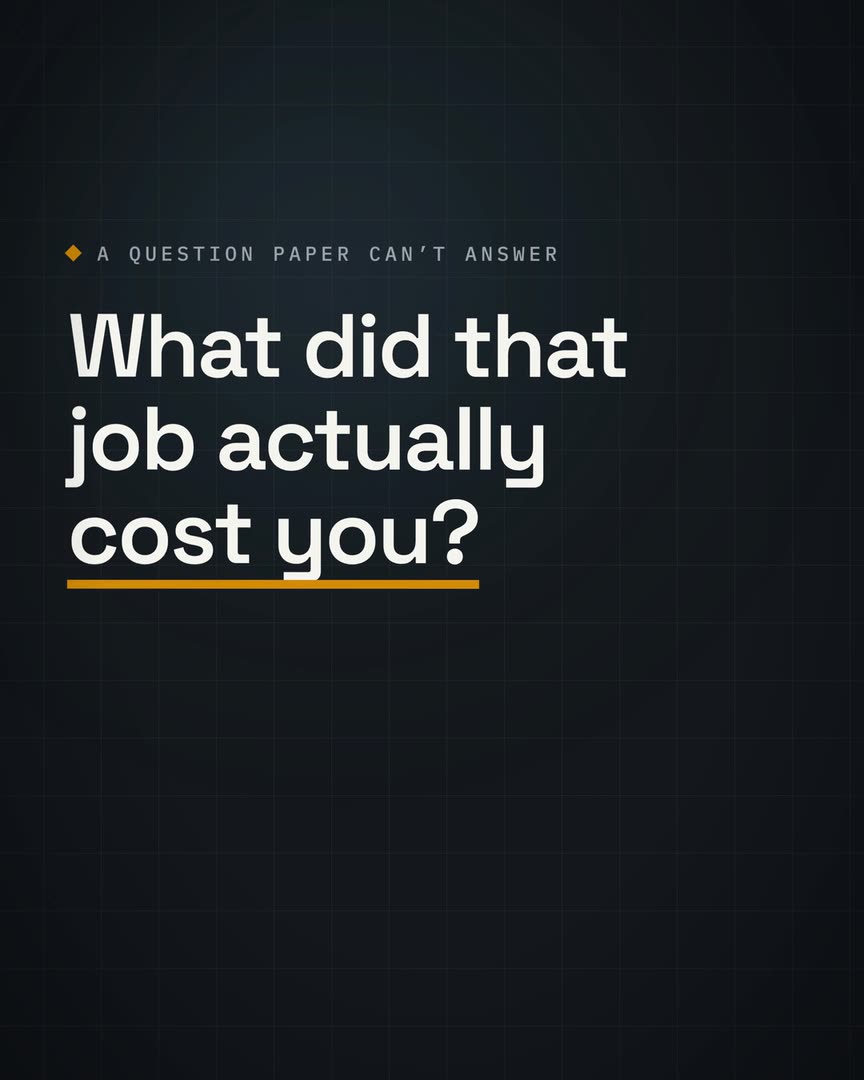
- What did that job actually cost you?
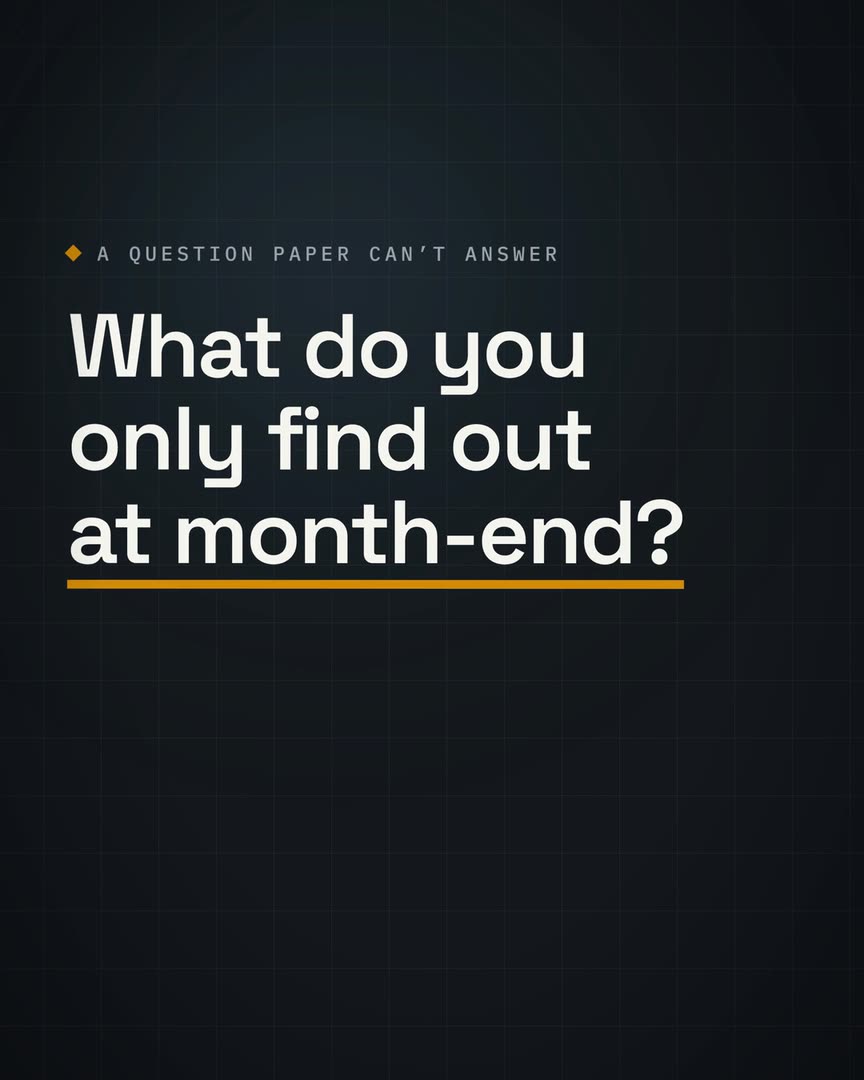
- What do you only find out at month-end?
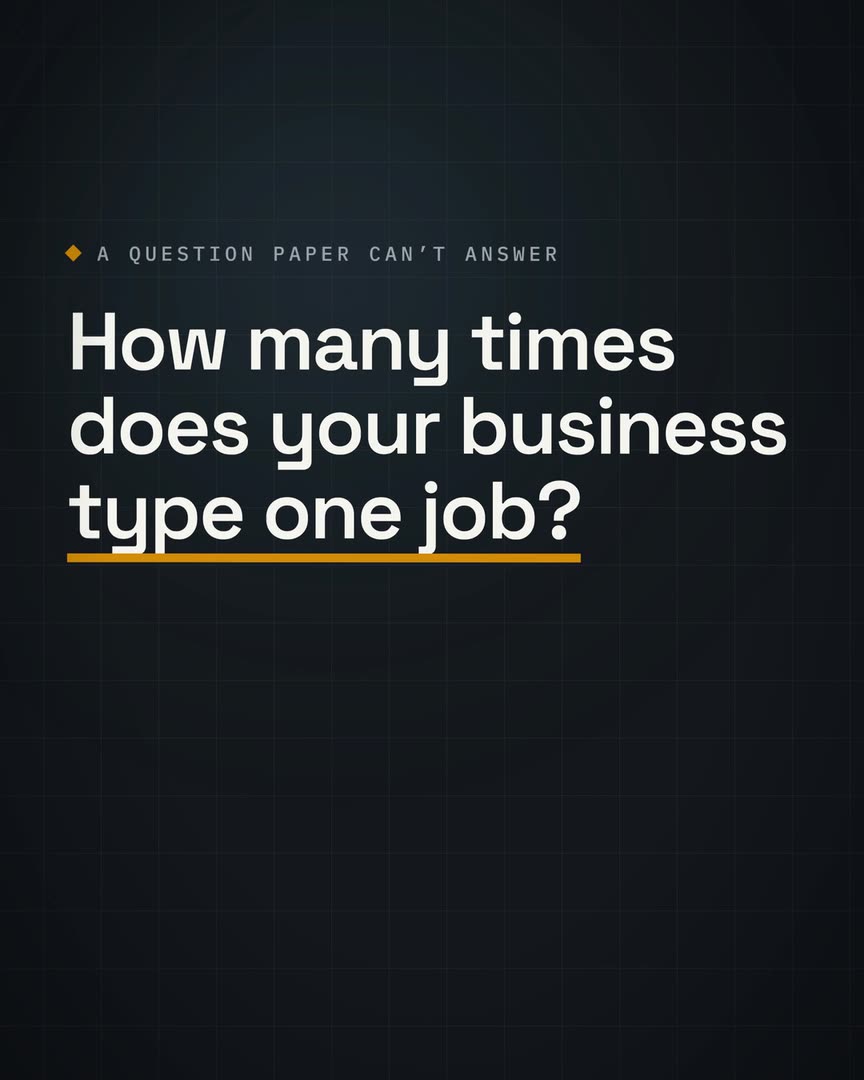
- How many times does your business type one job?
- What expires in the next 30 days?
- Which machine earned nothing this week?
- Who was on site, and can you prove it?
The reality
Paper on site. Spreadsheets in the office. Nothing reconciles.
Job cards captured on paper — re-keyed later, or lost.
Work done weeks before it's invoiced.
Spreadsheets that don't tie back to the accounts.
Three apps that don't talk to each other.
No audit trail when a client queries a charge.
Off-the-shelf software: too generic, or priced for enterprises.
Jobs come in by WhatsApp and phone — no record, no schedule, no follow-up.
Management numbers arrive weeks after month-end. Too late to change anything.
You didn't start your business to chase paperwork. But every job that isn't captured properly is revenue you can't invoice, a control you can't rely on, and a question you can't answer later.
See it work
Start with a question paper can't answer.
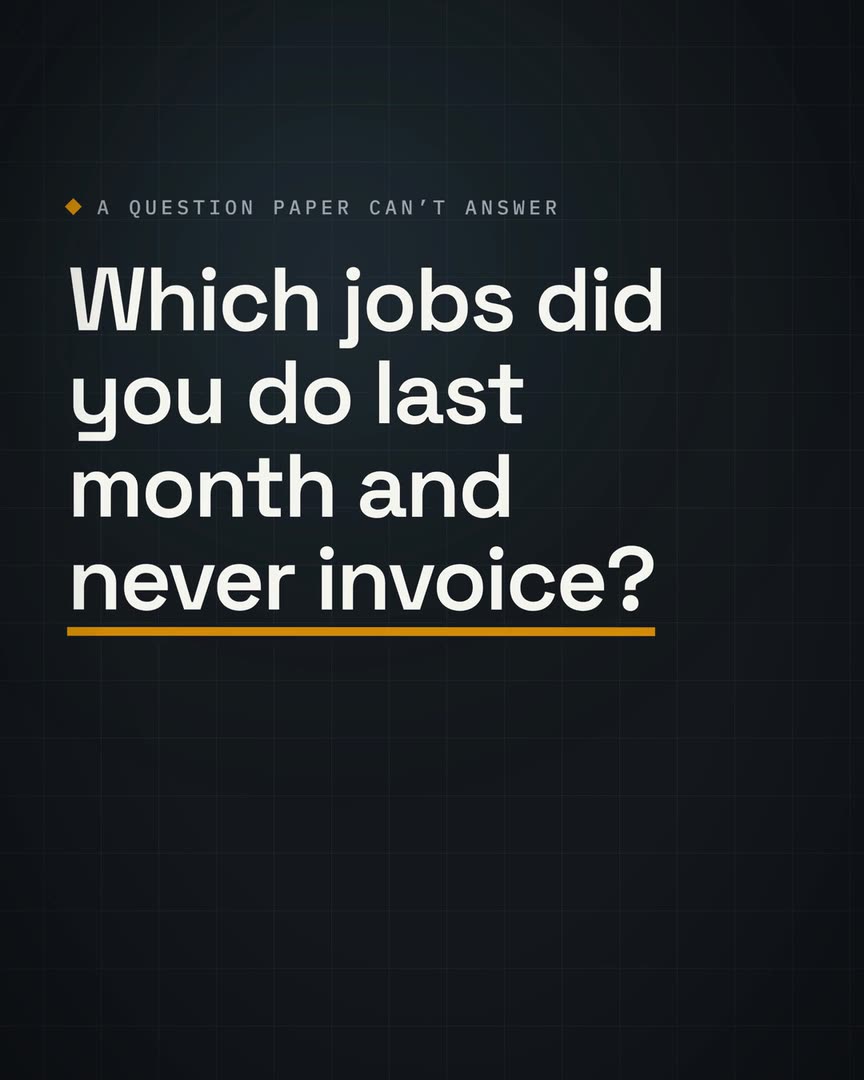
Which jobs did you do last month and never invoice? On paper, nobody can say — a missing job card leaves no trace. In 30 seconds, this example shows how a system answers it.
A paper job card goes missing, and nobody notices.
On a phone, every job gets a number the moment it starts.
Finished work with no invoice shows up as a list, ready to bill from the job data.
Demo company · illustrative data
Six more questionsFrom idea to system
Start with one line. I'll map the rest.

Most operations start with a hunch — there has to be a better way to run job cards, or to invoice work the week it's done.
I work through it with you: how the work actually flows, what needs capturing on site, where revenue leaks and which controls matter.
Captured once on site, the data flows to the invoice, the accounts and your reports, with no double entry.
By the end of the diagnostic, the idea is a mapped system with a fixed price.
See how it worksWhat I build
From the job on site to the invoice that reconciles.
Every system is built around your operation. These are the parts most field businesses need, and what each one changes.
-
Job cards & field capture
The job is captured before the crew leaves site.
Job cards on a phone, with photos, GPS and a signature. It works without signal and syncs when there is one.
-
Invoicing that reconciles
Invoice the day the job's done.
Invoices are raised from the job data, not retyped, and tie back to your accounts.
-
Scheduling & dispatch
The day's work, in one place.
Jobs, crews and vehicles on one schedule, so the office stops phoning around to find out.
-
Time, leave & PPE
Time captured daily, not rebuilt on payday.
Timesheets are approved by a manager and ready for payroll. Leave is approved and PPE issued, each with a signed record.
-
Assets, vehicles & compliance
Licence and service dates, flagged before they lapse.
Every vehicle, certificate and service date in one register, each with an owner.
-
Dashboards & reporting
This week's numbers, this week.
Live operational numbers that agree with the accounts — not a report three weeks after month-end.
-
Integrations
Captured once, used everywhere.
Feeds the accounting and payroll systems you already use, by direct connection or an import file, so figures are not typed twice.
-
On the roadmap
Practical AI, when you're ready.
Questions answered from your own job data, a photo of site notes turned into a job card, WhatsApp job intake and exception alerts. Every action logged, anything customer-facing approved by a person — never a black box.
Where it fits
The same pattern fits any business of roughly 10 to 200 people that sends its people out to do the work. Three examples.
Electrical contractors
Call-outs and installations, with test readings, photos and the client's signature on the job card.
Plumbing contractors
Call-outs, a quote approved on site, materials booked to the job and an invoice the same day.
Plant and equipment hire
Deliveries and collections with photos, hire days per machine, and service and licence dates flagged before they lapse.
More examples
Six more questions paper can't answer.
Each film takes 30 seconds and follows one question from the paperwork to the answer. Every screen shows a demo company and illustrative data. Two include an AI step that is on the roadmap, and say so on screen. Choose one to play it with sound.
-
Real job costs
Hours and materials are booked to the job as it happens, so you price from real costs, not from memory.
-
Live dashboard
Today's picture from today's job cards. Asking it a question in plain words is on the roadmap.
-
Typed once
Capture a job once and the system carries it the rest of the way. Capture from a photo of your notes is on the roadmap.
-
Expiry dates
Services, load tests and licences in one register, each with an owner and a date.
-
Idle machines
Every delivery and collection is a job card, so you can see what stopped earning.
-
Proof on site
Arrival time, location, photos and a signature, kept with the job for the day an invoice is queried.


What's different
Built by someone who's run the business, not just written the code.
-
A CFO's eye, not just a developer's.
Chartered Accountant and Group CFO. The software is built around audit trails, reconciliation and controls from the first line — so the numbers it produces are ones you can trust and defend.
-
Proven on a real operation.
The approach comes from building and running a live, multi-entity field-services platform — timesheets, leave, PPE, job cards, invoicing — not from theory.
-
You talk to the person who builds it.
No account managers, no offshore handoff, no dev shop that disappears after go-live. One accountable builder, with direct access from start to finish.
-
Verified before it goes live.
Every system ships against a fixed checklist: permission testing, input validation, backups with a tested restore, and audit logging. If it can't be reconciled, audited and restored, it doesn't go live.
-
Your data is yours. Always.
A full export of your data, whenever you ask. The software is licensed, which is what keeps it maintained, supported and affordable — and if we ever part ways, you can keep running your system at a price fixed in your agreement on day one.
-
Priced so you know where you stand.
A fixed price to build and a simple monthly licence for hosting, maintenance and support. The figures are on this page. No open-ended hourly billing.
Proof
A multi-entity field-services group, off paper and onto one platform.
- On-site job cards with photos and GPS, replacing paper.
- Scheduling and time capture in one place.
- PPE issuance and leave tracked with a full audit trail.
- Invoicing raised directly from job data and reconciled to the accounts.
- Vehicle and compliance flags for licences and services before they lapse.
- Run as a managed platform — the group's data, exportable any time.
Next step
See where your operation leaks — and whether custom software is worth it.
How it works
Three steps. No surprises.
-
Diagnostic.
After a free 30-minute call, a paid diagnostic: I map how the work actually flows today — the paper, the spreadsheets, the handoffs, the leakage and the control gaps. You get a clear picture and a fixed-price proposal.
-
Build.
I design and build the system, showing you working software early and often, so it fits how you actually operate.
-
Host & support.
A simple monthly licence keeps it hosted, maintained and supported. Changes as your operation grows are quoted separately, at a fixed price.
What it costs
Fixed to build. Simple to keep.
Many development agencies bill by the hour, with no ceiling. Most off-the-shelf software charges per user, every month, for a generic fit. FieldVane is a fixed price to build what you actually need, then a predictable monthly licence. You know the numbers before you commit.
- Diagnostic
- R18,000 Credited in full against a build started within 90 days.
- Build
- from R145,000 A single-company core system. Larger or multi-company systems are typically R220,000 to R380,000. Fixed by a statement of work before you commit.
- Monthly licence
-
from R5,500 a month
Set by the number of people in the field. Hosting, maintenance and support included. Office and management users are free.
- Up to 10 people in the field:R5,500 a month
- 11 to 25 people in the field:R9,500 a month
- 26 to 50 people in the field:R14,500 a month
- 51 to 100 people in the field:R22,000 a month
Every quote is fixed and specific to your business. A free 30-minute call comes first. FieldVane is not registered for VAT. No VAT is charged.
Count it yourself
Does it pay? Use your own figures.
Three numbers you already know. Nothing you type leaves this page.
11 to 25 people in the field
R9,500 a month
- The same as 3 jobs a month at your average invoice.
- Or 38 office hours a month.
- Three years, with a build from R145,000: from R487,000.
If paper is costing you more than that in unbilled jobs and retyping, the system pays for itself.
Who you're working with
Data plate
- Designation
- Chartered Accountant CA(SA)
- Role
- Group CFO — multi-entity operations
- Builds
- Production systems in daily use
- Base
- Gauteng, South Africa
- Contact
- kenneth@fieldvane.co.za
Kenneth Wood — Chartered Accountant, CFO, and the person who builds it.
I'm a Group CFO who runs finance, tax, compliance and operations across a multi-entity group — and I build software to solve the operational problems I live with every day.
It's a rare combination: someone who understands your P&L, your compliance risk and your operations — and can build the software to fix them. I'm accountable for the whole build, from the first diagnostic to the software your team uses every day.
When do I work on your system?Straight answers
The questions you're actually asking.
FieldVane runs alongside my role as a Group CFO, and it is planned that way. I take on one build at a time, so once yours starts it has all my build time. Build work happens in scheduled blocks outside office hours, and you see working software at every milestone. Once you're live, support requests are logged and answered within the response times written into your agreement, and the system keeps running on managed hosting with daily backups whether I'm at my desk or not.
Your system runs on managed cloud hosting with daily backups, so it keeps working whether or not I'm at my desk. Support requests are logged and answered within the response times in your agreement. Your data is always yours: a full export, on request. If we part ways, you can keep running your system under a licence, at a price fixed in your agreement on day one.
Off-the-shelf fits the average of everyone and the reality of no one. Custom software fits how you actually work — and reconciles to your numbers.
That means your job card, your approval steps, your pricing rules and your compliance registers, built in from the start. You don't bend the business around a template.
It also means a licence that moves in bands, not with every person you add, and office and management users who cost nothing. And it means numbers that tie back to your accounts, because a Chartered Accountant built it that way.
You work directly with the one person who understands both the code and the business — no account managers, no handoffs, and a fixed price instead of an hourly meter.
The approach was built in field services and trades — operations where the work happens off site and gets captured on paper. If that's your world, it's the one this is built for. The diagnostic is where I learn the detail of yours.
A modern, standard web stack — nothing exotic — hosted and managed for you in South Africa, with a full export of your data on request. If your IT person asks: React and Node.js with a PostgreSQL database, hosted on xneelo or AWS in South Africa.
Each system ships against a fixed verification checklist: permission testing, input validation, backups with tested restores, and audit logging. My day job is financial control, so a system that can't be reconciled, audited and restored doesn't go live. Where AI features are added, every action is logged, customer-facing actions are approved by a person, and your data is never used to train AI models.
Your data is yours, always, with a full export on request. The software is licensed, not sold: FieldVane owning the platform is what keeps it maintained, supported and affordably priced. If we ever part ways, you can keep running your system under a licence at a price fixed in your agreement on day one.
Still running on paper? Let's fix that.
A short diagnostic call, no obligation. I'll tell you honestly whether custom software is worth it for your operation.
- No obligation, no pitch
- Direct with the founder
- An honest answer, either way
Opens Microsoft Bookings in a new tab. Your details are handled under the Privacy Notice.
Prefer email? kenneth@fieldvane.co.za